SS United States Sinks in 2026: Historic Ocean Liner Begins New Life as an Artificial Reef

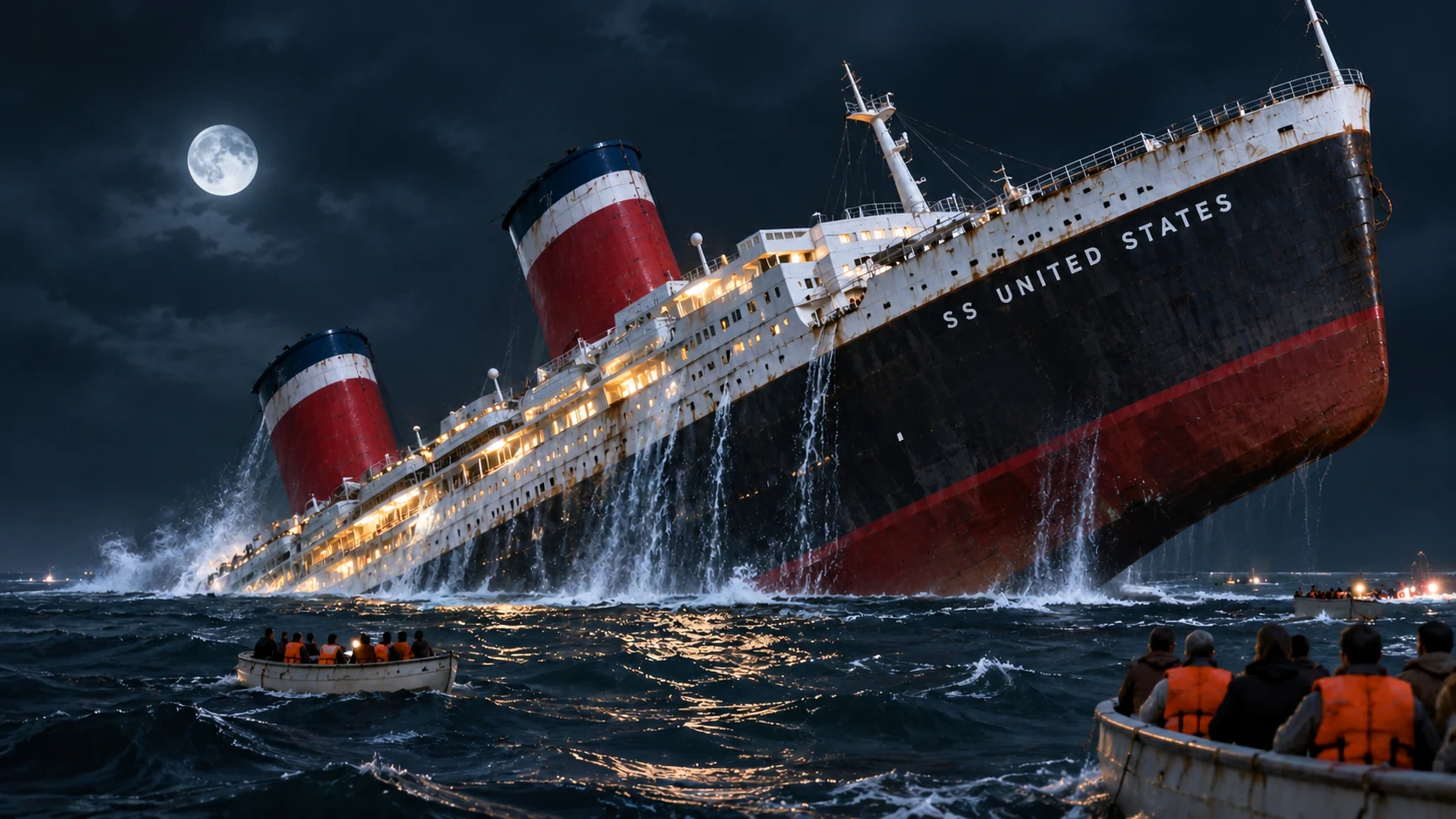
SS United States Sinks in 2026: The Historic Ocean Liner Begins a New Life Underwater
Once celebrated as the fastest ocean liner in the world, the SS United States has completed its final voyage. The historic vessel was deliberately sunk off Florida to create a vast artificial reef and a new habitat for marine life.
The historic SS United States, one of the most famous passenger ocean liners in American maritime history, has reached the end of its journey above water. On November 11, 2026, the enormous vessel was deliberately sunk in the Gulf of Mexico, off the coast of Destin-Fort Walton Beach, Florida. Its new purpose is very different from the one for which it was originally built: it is intended to become an artificial reef supporting marine life and underwater exploration.
The sinking was not the result of an accident, storm or maritime disaster. It was a planned operation organised as part of an artificial reef project led by Okaloosa County. The transformation gives the retired liner a new role after decades of service, retirement and uncertainty about its future.
What Happened to the SS United States?
The SS United States was sunk on November 11, 2026, in the Gulf of Mexico, approximately 22 nautical miles southwest of Destin-Fort Walton Beach in Florida. The 990-foot-long vessel was prepared for a controlled sinking so that it could settle underwater and serve as a large artificial reef.
According to Florida's Fish and Wildlife Conservation Commission, the operation involved several agencies and partner organisations. Officials coordinated safety zones, spectator boats, emergency response and security during the deployment. The agency reported that hundreds of vessels came and went during the event, with no reported injuries or significant boating incidents.
The project is being described by organisers as the creation of the world's largest artificial reef. The ship's size makes it a substantial underwater structure, potentially providing shelter and surfaces where marine organisms can settle and grow.
The History of the SS United States
Launched in 1952, the SS United States was designed to represent American engineering, speed and maritime ambition. Built in Newport News, Virginia, the liner was created for transatlantic passenger travel. Its design combined luxury passenger facilities with technical features that reflected the strategic thinking of the period.
The ship quickly became famous for its speed. During its maiden voyage across the Atlantic in 1952, it set a record by completing the crossing in approximately three days and ten hours. The achievement established its reputation as the fastest ocean liner in the world, a distinction it continues to hold.
At approximately 990 feet long, the vessel was an extraordinary example of mid-twentieth-century shipbuilding. It carried passengers across the Atlantic and became associated with an era when ocean liners were important symbols of international travel and national prestige.
A ship that carried famous passengers
Over the years, the SS United States carried well-known personalities, public figures and ordinary travellers. Its passenger history included Hollywood stars and political figures. The vessel was more than a transport ship: it represented an age when travelling by ocean liner was itself a major experience.
From passenger service to retirement
Changing travel patterns, particularly the growth of commercial air travel, weakened the economics of traditional transatlantic passenger ships. The SS United States was decommissioned in 1969. It later spent many years docked in Philadelphia, where preservation supporters continued efforts to protect the vessel and its historical significance.
Its future remained uncertain for decades. The cost of maintaining such a large ship and the difficulty of finding a sustainable use made preservation increasingly challenging.
The Final Voyage and Controlled Sinking
The final transformation required extensive preparation. Before the sinking, the ship underwent remediation and other work intended to make it suitable for deployment as an artificial reef. Environmental preparation is essential because a retired vessel cannot simply be placed underwater without removing materials that could cause pollution.
Reports on the operation describe the removal of more than 400 portholes and the creation of large openings in parts of the ship. These changes help water move through the structure and allow the vessel to sink in a controlled manner. Explosives were not used in the operation.
The sinking took several hours. Crews flooded tanks with seawater to help the ship settle evenly. The vessel eventually disappeared beneath the Gulf waters late on November 11. The slow descent became a major part of the public farewell to a ship that had once been famous for crossing the Atlantic at extraordinary speed.
Why Turn a Historic Ship into an Artificial Reef?
An artificial reef is a man-made structure placed underwater to provide habitat for marine organisms. Properly prepared ships, concrete structures and other approved materials can create surfaces and spaces where algae, sponges, corals and other organisms may attach and grow.
As these organisms develop, they can attract smaller fish and other marine life. Larger fish may then use the structure for shelter or feeding. Over time, an artificial reef can become part of a wider underwater ecosystem.
The waters near Destin-Fort Walton Beach already contain artificial reef sites. The SS United States adds an unusually large structure to the region's underwater landscape. It is also expected to support recreational diving and fishing, creating another attraction for visitors to the Florida Panhandle.
Potential benefits for marine life
The ship's surfaces and internal spaces may provide shelter for a variety of marine organisms. Florida's Fish and Wildlife Conservation Commission explains that artificial reefs can support organisms such as algae, sponges, corals and barnacles, which can form the foundation of a developing reef community. These organisms can attract baitfish and larger species, including snapper and grouper.
However, an artificial reef does not become a mature natural ecosystem overnight. Its ecological value will depend on how organisms colonise the structure and how the surrounding environment responds over time.
A New Opportunity for Marine Science
The SS United States project is not only about tourism and recreation. It also offers researchers an opportunity to observe how a large artificial structure becomes part of a marine ecosystem from the beginning.
Scientists from the Woods Hole Oceanographic Institution are involved in research focused on the site's developing environment. Their work is expected to examine water chemistry, microbial activity and the arrival of marine organisms. Researchers will also study how the ship's materials interact with the surrounding seawater.
One particularly important aspect is the ability to establish a baseline soon after deployment. Researchers can document the initial condition of the site and compare future observations to understand how the ecosystem changes over months and years.
This information may help scientists improve understanding of artificial reefs and the ecological effects of large underwater structures. It may also contribute to better planning and monitoring of future reef projects.
The Legacy of the SS United States
The SS United States has had several identities: a symbol of American shipbuilding, a record-setting ocean liner, a passenger vessel, a retired historic landmark and now an artificial reef. Its final chapter does not erase its earlier history. Instead, it gives the ship a new purpose while keeping public attention on its maritime story.
For historians and preservation supporters, the sinking may bring mixed emotions. The physical ship is no longer available to be experienced in the same way as a museum vessel, but its story can continue through archives, photographs, exhibitions and land-based interpretation projects.
For marine scientists, divers and local communities, the underwater structure represents a different kind of beginning. Its long-term success will be measured not only by visitor interest but also by the health of the habitat that develops around it.
What Happens Next?
Researchers and local partners will monitor the site as marine organisms begin to colonise the structure. Divers may eventually explore the wreck under appropriate safety conditions and applicable regulations. Fishing and tourism operators may also benefit from the new reef, although access will depend on site conditions and local guidance.
The most important changes will take place gradually. The ship's steel structure will interact with seawater, organisms will settle on its surfaces, and the surrounding marine community will develop over time. Continued scientific monitoring will help determine how this artificial reef performs as a habitat.
Conclusion
The sinking of the SS United States marks the end of an extraordinary chapter in passenger shipping history. Once the fastest ocean liner in the world, the 990-foot vessel has been deliberately placed on the Gulf of Mexico seabed to become an artificial reef.
Its story now connects maritime history with marine conservation, tourism and scientific research. Whether remembered for its record-breaking Atlantic crossings or its new role underwater, the SS United States remains a remarkable part of modern maritime history.
Sources and Further Reading

Result For India News Desk
Verified updates on education, exam dates, government schemes, and public notifications.